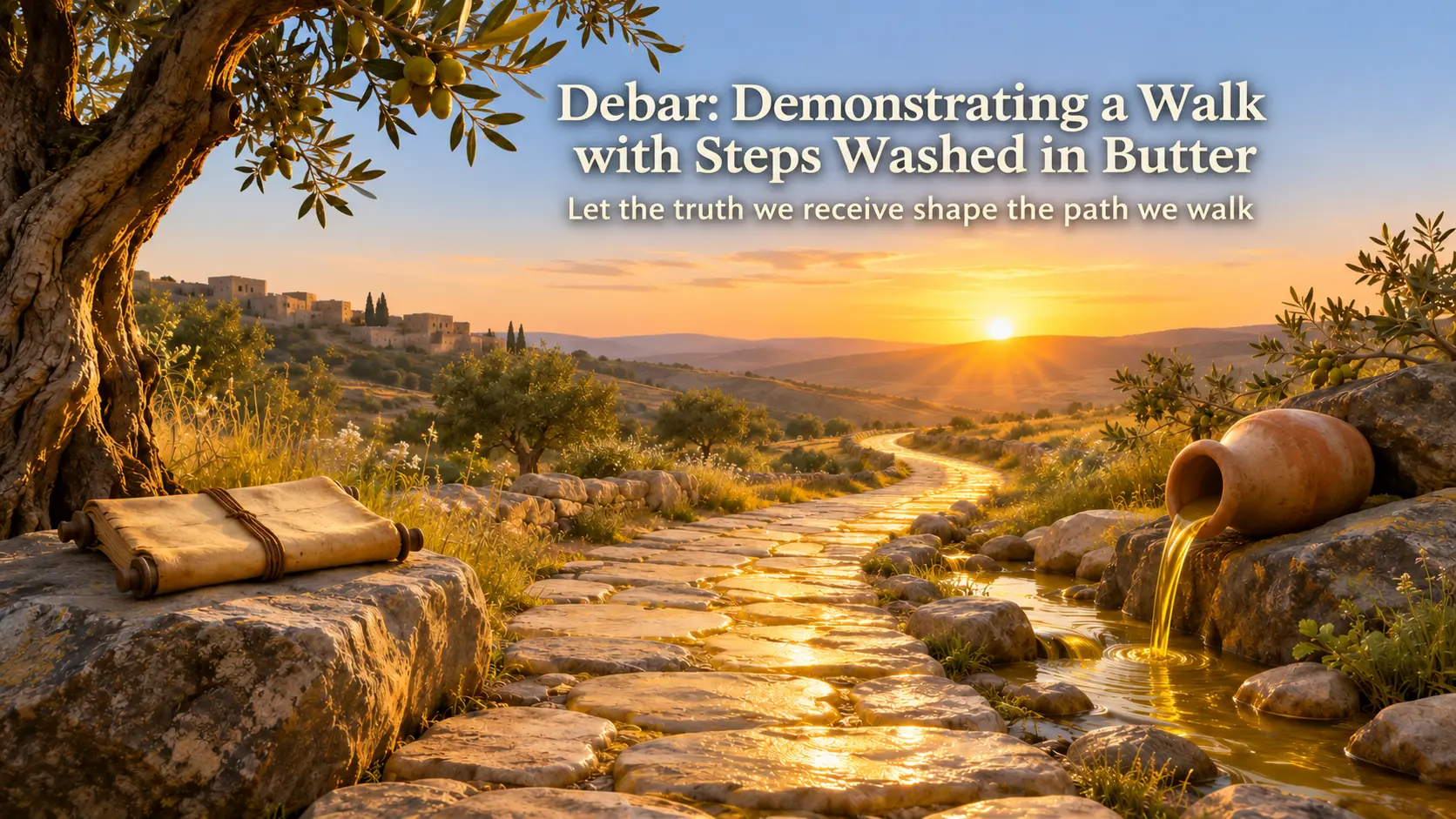
Let the truth we receive shape the path we walk
By Herman Bouwer
There is a difference between hearing a message and allowing its truth to shape our lives. Scripture calls us to more than collecting teaching or repeating familiar phrases. God’s word is to form our character, guide our decisions and move us toward faithful service.
Job gives us a vivid image for this kind of walk:
Job 29:6 BSB
(6) when my steps were bathed in cream and the rock poured out for me streams of oil!
What can this picture teach us about receiving God’s word, and how do we apply it without reading more into the verse than Job intended?
Read Job’s words in their setting
Job 29 is a remembrance. Job looks back on a former season when he experienced God’s favour, was respected in his community and could help people in need. He is speaking from the pain of a changed present and longing for the days that have passed. Verse 6 belongs to that memory of abundance and well-being.
That context matters. Job is not giving a formula that guarantees wealth, ease or a particular spiritual experience to every believer. The image of cream or butter and oil communicates richness and provision in the life Job remembers. We may use it devotionally as a picture of God’s care, but we should distinguish that application from the direct meaning of the verse.
The “steps” in the image invite us to think about the course of a life: the choices we make, the habits we practise and the way we treat people. A life shaped by God’s wisdom is not proved by impressive language. It is seen in the path we take.
Listen to the Lord and turn from folly
Psalm 85 gives us a helpful pattern. The psalmist waits to hear from God, speaks of peace for His people, and warns them not to return to folly. Listening to God is connected with turning toward His ways. It is not passive attention; it is a readiness to respond.
Psalm 85:8 BSB
(8) “I will listen to what God the LORD will say.”
The rest of the verse connects that listening with peace and a call not to return to folly. In the same psalm, righteousness goes before the Lord and prepares the way for His steps (Psalm 85:13 BSB). The picture is of a path made ready for God’s righteous purpose.
For us, the application is practical: when Scripture exposes a wrong attitude, we repent; when it calls us to forgive, we take steps toward forgiveness; when it teaches generosity, we share; and when it warns us against harm, we stop and seek a wiser way. God’s grace does not remove the call to obedience. It teaches us to live faithfully.
Receive teaching with reverence and discernment
Psalm 29 celebrates the power and majesty of the Lord’s voice. Reverence for God should make us attentive to His word. It should also make us careful about claiming that every strong impression, sermon or prediction is the voice of God. We test teaching by Scripture and by the character of Jesus.
The New Testament calls believers to grow in faith, knowledge, self-control, perseverance, godliness and love (2 Peter 1:5–9). It also warns us not to refuse the One who speaks and calls us to worship God with reverence (Hebrews 12:25–29). These passages direct our attention to faithfulness before God; they do not require fear-based loyalty to a human messenger.
A healthy response is to listen carefully, read the passage in context, ask honest questions, pray and seek wise counsel. A teaching that is true can withstand examination. No human messenger stands above Scripture, and no one should be pressured to obey a person in a way that violates Scripture or harms another person.
Rahab shows that faith takes action
Joshua 2 tells how Rahab received the Israelite spies and hid them when the king of Jericho demanded that she hand them over. She had heard what the Lord had done and confessed that the Lord was God in heaven above and on earth below (Joshua 2:9–11). Her faith led her to act courageously and to seek the protection of her household.
The New Testament remembers Rahab as one whose faith was expressed through action (Hebrews 11:31; James 2:25). Her story reminds us that trust in God is more than agreement in our minds. It becomes visible in our choices.
Rahab’s actions belong to a specific moment in Israel’s history. Her story is not a general command to conceal information or take risks for any religious leader. The lasting lesson is to trust God and act courageously when Scripture makes the faithful course clear. In our own setting, that may mean telling the truth, protecting someone vulnerable, keeping a promise or refusing to participate in wrongdoing.
Ehud calls for preparation, not hidden codes
Judges 3:12–30 recounts how Ehud delivered Israel from Moabite oppression. The passage describes a particular act of deliverance in a violent period of Israel’s history. It tells what happened; it does not instruct Christians to imitate violence or turn every detail into a secret symbol.
We can use the image of preparing a tool as an illustration of readiness: believers should learn Scripture, cultivate wisdom and prepare to serve faithfully. That is an application, not the direct meaning of Ehud’s dagger. Our spiritual strength is expressed through truth, prayer, perseverance, justice and service (Ephesians 6:10–18).
God’s provision invites practical participation
In 2 Kings 4:1–7, a widow in debt seeks help from Elisha. She gathers empty vessels, and the small amount of oil she has continues until the vessels are full. She sells the oil, pays her debt and lives on what remains. The passage shows God’s provision in a real crisis and the practical steps the widow takes in response.
This account encourages trust, prayer and responsible action. It also calls a community to notice people under pressure and help in concrete ways. It should not be turned into a promise that every ministry or household will receive wealth, growth or a particular “flow” of anointing. We can trust God without claiming outcomes He has not promised.
Let what you hear become the way you live
Hebrews 5:11–14 describes maturity as growth developed through practice. The writer urges believers to move beyond the basics and to train their discernment through use. In that sense, we can use “milk becoming butter” as an illustration: teaching must be reflected on, understood and practised before it becomes part of our daily walk.
Study belongs with prayer; knowledge belongs with love; public gifts belong with private character; spiritual language belongs with practical care. The measure of teaching is not how exciting it sounds or how easily we repeat it. We should ask whether it is producing truthfulness, humility, holiness, mercy and service.
As you reflect on the teaching you have received, consider these questions:
- What Scripture has recently challenged me, and what is one specific response I can make?
- Is there a relationship, habit or responsibility that needs to come into line with God’s word?
- How can I serve someone in a practical way this week?
To walk with our steps washed in butter is, as a devotional image, to let God’s truth accompany and shape the path we take. Job’s words remain rooted in his memory of former blessing; the wider witness of Scripture shows that hearing God must be joined to discernment, humility and action. We receive the word gratefully, test what we hear faithfully and practise what is true in the ordinary decisions of life.
The goal is not to chase dramatic experiences or depend on a human voice. The goal is to know and follow the Lord, grow into the character of Jesus, and make our faith visible through love, righteousness, courage and service.