A biblical teaching by Herman Bouwer
Subtitle: How Christ’s authority is expressed through humility, faithful stewardship, wisdom, and practical care
Key Scripture: Revelation 22:3–5 (BSB)
Kingdom administration is the faithful ordering of life and responsibility under the authority of God. Scripture’s closing vision in Revelation 22:3–5 gives us a striking picture: the throne of God and the Lamb is at the centre, His servants serve Him, and they reign with Him. The passage holds service and delegated authority together. In God’s Kingdom, authority is not an invitation to self-importance; it is a trust to be exercised in loyalty to the King.
The New Jerusalem is the fulfilment of God’s purpose, when He dwells openly with His people. The Church has not yet reached that final fullness, but it is called to anticipate the life of the coming Kingdom. We do this as Christ forms a people whose leadership, relationships, and public witness reflect His character. Kingdom administration therefore begins with the heart and becomes visible in the way we serve others.
1. A Heart Formed by Servanthood Rather Than Position
In Mark 10:42–45, Jesus contrasts the authority structures familiar among the nations with the way His disciples are to live. He teaches that greatness in His community is measured by service. He then points to His own example: the Son of Man came to serve and to give His life.
This does not mean that leadership, responsibility, or authority has no place in the Church. It means these are entrusted for the good of others and remain under Christ’s rule. A servant-hearted leader accepts responsibility, listens carefully, treats people with dignity, and uses influence to strengthen rather than diminish them. Position may define an assignment, but it cannot replace the character required to carry it.
2. Faithful Stewardship of What God Entrusts
Paul describes ministers as servants of Christ and stewards entrusted with the things of God, adding that a steward must be found faithful (1 Corinthians 4:1–2). A steward manages what belongs to another. This shifts our attitude from ownership to accountability: our gifts, opportunities, time, resources, relationships, and responsibilities are trusts to be handled faithfully.
Faithfulness is seen in both visible and ordinary work. It includes keeping commitments, using resources wisely, preparing well, being dependable, and giving an honest account of our decisions. Luke 16:10–12 connects trustworthiness in small responsibilities with readiness for greater ones. Kingdom administration is not measured only by size, recognition, or rapid results; it is measured by obedience and faithfulness to the assignment God has given.
3. Serving with Wisdom from Above
James 3:17 describes wisdom from above as pure, peaceable, gentle, willing to yield, full of mercy and good fruit, impartial, and sincere. These qualities provide a practical standard for decisions made in homes, churches, ministries, and communities.
Kingdom work needs more than energy or clever planning. It needs motives that are clean, decisions that are fair, and conduct that produces peace and good fruit. A wise servant can hold conviction without harshness, receive correction without defensiveness, and seek a just outcome without favouritism. When responsibility is carried with humility and discernment, the people affected by a decision are treated as neighbours and fellow members of Christ’s body, not as instruments for someone else’s ambition.
4. Authority Expressed Through Contribution, Not Domination
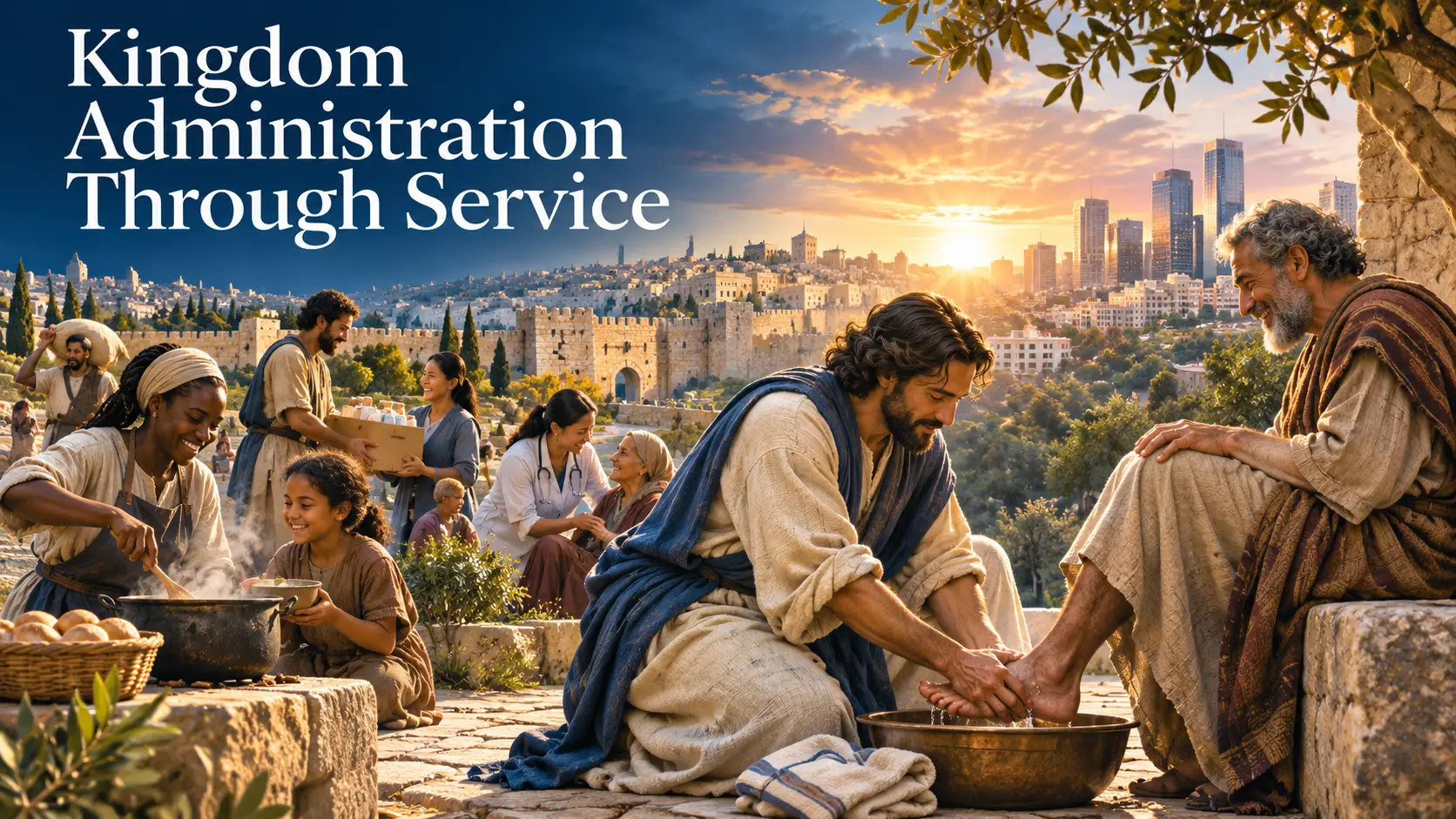
In John 13:12–15, Jesus washes His disciples’ feet and tells them to follow His example. The scene does not erase His authority as Teacher and Lord; it reveals the way He uses it. His authority equips, cleanses, and serves. Christian leadership follows the same pattern.
Ephesians 4:11–16 describes ministry gifts given to equip the saints and build up the body of Christ. First Peter 4:10 likewise calls believers to use the gifts they have received in serving one another as faithful stewards of God’s grace. Leaders contribute by helping others grow into their calling. Members contribute through the grace and ability entrusted to them. The result is a body in which people are equipped to serve, rather than a structure that depends on one person’s control.
5. A Culture Marked by Righteousness, Peace, and Joy
Romans 14:17 summarises the Kingdom of God in terms of righteousness, peace, and joy in the Holy Spirit. These are not decorative words for a church’s mission statement. They describe the kind of life God’s rule produces among His people.
Righteousness calls us to honesty, fairness, and integrity. Peace calls us to pursue reconciliation and to refuse needless division. Joy in the Holy Spirit gives strength and hope that are not dependent on personal status or outward success. Where Kingdom administration is healthy, people should increasingly encounter truthfulness, just treatment, mutual care, and hope. The Church’s witness in the city becomes credible when its service expresses the values it proclaims.
6. Service as Worship and Participation in Christ’s Reign
Revelation 22:3–5 places service in the presence of God and the Lamb. The servants belong to Him, bear His name, and live in His light. Their service is not a means of self-promotion; it is a response of allegiance and worship. The same vision says they will reign forever, showing that service and delegated authority are not enemies in God’s purpose.
For believers today, this future hope gives meaning to faithful work in the present. Romans 12:1–8 describes whole-life worship that includes the humble use of different gifts within one body. We serve under Christ, follow His example, and use responsibility for the flourishing of others. Every crown of achievement is held under the authority of the King of kings. True Kingdom influence begins with belonging to Him and remains shaped by His servant heart.
Putting the Teaching into Practice
Kingdom administration through service can be practised in concrete ways. In families, it means sharing responsibility and treating one another with honour. In congregations, it means equipping people, handling resources transparently, and making room for different gifts. In the workplace and neighbourhood, it means serving with integrity, offering our skills for the common good, and treating people fairly. Each believer can identify one responsibility already entrusted to them and carry it with greater faithfulness, wisdom, and care.
For Reflection
- Where am I tempted to value recognition more than faithfulness?
- What responsibility or resource has God entrusted to me to steward well?
- How can I use my authority or influence to equip and strengthen another person?
- Do my decisions and conduct produce greater righteousness, peace, and hope in the community around me?
Conclusion
Kingdom administration is service under the reign of Christ. Jesus defines greatness through humble care; Scripture calls stewards to faithfulness, servants to wisdom, and the whole Church to contribute its gifts for the building up of others. Revelation’s vision assures us that God’s servants serve Him and reign with Him. As the Church lives this pattern now, it becomes a clearer witness to the Kingdom in the city.
Continue reading: Kingdom Administration: City in the City | Kingdom Radiance: Becoming the Visible Expression of Christ
Scripture references in this article follow the Berean Standard Bible (BSB).