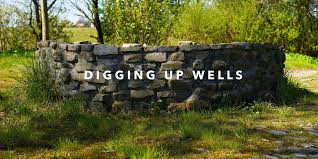
DIGGING WELLS: THE SPIRITUAL RESTORATION OF LIFE, PURPOSE, AND FLOW
A Study from Genesis 26
Introduction
In Genesis 26, Isaac entered a season marked by famine, opposition, limitation, and conflict. Yet in the middle of adversity, God prospered him. One of the most powerful themes in this chapter is the digging and reopening of wells.
Wells in Scripture were sources of life, survival, fruitfulness, inheritance, and prosperity. Without water, there could be no growth, no livestock, no harvest, and no future. Spiritually, wells represent the inner life of the believer — places of communion with God, revelation, spiritual flow, refreshing, productivity, and covenant inheritance.
Many believers today are saved but spiritually dry. Their wells have been blocked by disappointment, sin, distraction, offense, fear, carnality, compromise, or spiritual neglect. Genesis 26 reveals that restoration often begins when a believer returns to dig again.
THE BACKGROUND OF GENESIS 26
The chapter opens with famine in the land.
“There was a famine in the land, besides the first famine that was in the days of Abraham…” — Genesis 26:1 (NKJV)
Isaac was facing external pressure and uncertainty. Like many believers, he was tempted to move toward what appeared safer and easier. Yet God instructed him to remain where He had placed him.
This teaches us an important principle:
GOD OFTEN RESTORES WELLS IN SEASONS OF FAMINE
Sometimes God allows dry seasons not to destroy us, but to bring us back to the wells we abandoned.
Famine exposes:
- what truly sustains us,
- where our dependence lies,
- and whether our relationship with God is genuine.
Many believers only rediscover prayer during crisis. Others rediscover worship, holiness, or intimacy with God after seasons of spiritual emptiness.
The famine becomes the catalyst for digging again.
THE WELLS OF ABRAHAM HAD BEEN STOPPED
Genesis 26:15 says:
“Now the Philistines had stopped up all the wells which his father’s servants had dug in the days of Abraham his father, and they had filled them with earth.”
The enemy understood something important:
If you stop the wells, you stop the flow of life.
Spiritually, the enemy seeks to fill the believer’s wells with “earth” — natural things that suffocate spiritual vitality.
WHAT DOES “EARTH” REPRESENT SPIRITUALLY?

Earth can symbolize:
- carnality,
- worldly distractions,
- bitterness,
- offense,
- unbelief,
- spiritual laziness,
- compromise,
- fear,
- unresolved wounds,
- pride,
- prayerlessness,
- and sin.
A believer may still attend church while their spiritual wells remain blocked internally.
The outward form exists, but the inward flow is gone.
ISAAC REOPENED THE WELLS OF HIS FATHER
Genesis 26:18 says:
“And Isaac dug again the wells of water which they had dug in the days of Abraham his father…”
Isaac did not start by creating something entirely new. He restored what already belonged to covenant inheritance.
This is deeply prophetic.
Many believers are not called to invent a new spiritual life but to recover:
- lost intimacy,
- lost prayer,
- lost devotion,
- lost passion,
- lost holiness,
- lost hunger for God,
- and lost sensitivity to the Holy Spirit.
There are wells in your spiritual inheritance that must be reopened.
PRACTICAL SPIRITUAL WELLS EVERY BELIEVER MUST DIG
-
THE WELL OF PRAYER
Prayer is one of the first wells the enemy attacks.
When prayer dries up:
- discernment weakens,
- spiritual strength declines,
- temptation increases,
- and sensitivity to God fades.
Jesus consistently withdrew to pray because prayer sustains spiritual life.
Practical Application
To reopen the well of prayer:
- create consistent time with God daily,
- remove distractions,
- pray with Scripture,
- develop private devotion before public ministry,
- and persist even when you do not “feel” spiritual.
Spiritual wells are not dug through emotion but through discipline and hunger.
-
THE WELL OF THE WORD OF GOD
Many believers survive on motivational messages instead of deep biblical nourishment.
The Word renews, cleanses, corrects, and stabilizes the believer.
“Man shall not live by bread alone, but by every word that proceeds from the mouth of God.” — Matthew 4:4 (NKJV)
Practical Application
To dig this well:
- study Scripture consistently,
- meditate on the Word,
- write down revelations,
- apply biblical truth practically,
- and allow Scripture to confront areas of compromise.
A blocked Word-well produces spiritual instability.
-
THE WELL OF WORSHIP
Worship reconnects the heart to God.
The enemy wants believers to become religious without affection for Christ.
When worship dries up:
- ministry becomes mechanical,
- church becomes routine,
- and spiritual passion fades.
Practical Application
Reopen this well by:
- worshipping privately, not only corporately,
- cultivating gratitude,
- removing idols from the heart,
- and focusing on God’s worth rather than personal benefit.
True worship restores spiritual sensitivity.
-
THE WELL OF HOLINESS
Compromise contaminates spiritual wells.
Many believers desire power without purity, influence without consecration, and blessing without surrender.
Yet holiness protects the flow of God in a believer’s life.
Practical Application
Dig this well through:
- repentance,
- accountability,
- separating from sinful patterns,
- guarding your eyes and thoughts,
- and walking in obedience even when inconvenient.
Purity preserves spiritual clarity.
-
THE WELL OF PURPOSE AND CALLING
Many believers become spiritually dry because they disconnected from divine assignment.
Isaac prospered when he remained where God instructed him.
Purpose is connected to place, obedience, and alignment.
Practical Application
To dig this well:
- seek God concerning your assignment,
- stop comparing your journey with others,
- serve faithfully where God planted you,
- and steward your gifts consistently.
A believer disconnected from purpose eventually loses spiritual momentum.
OPPOSITION WILL COME WHILE DIGGING WELLS
Isaac experienced conflict over the wells he dug.
The names of the wells reveal stages of spiritual warfare.
Esek — “Contention”

People resisted Isaac.
Spiritually, when believers begin restoring spiritual depth, opposition often increases.
Sometimes:
- relationships change,
- misunderstandings arise,
- distractions intensify,
- and warfare increases.
The enemy fights restored flow.
Sitnah — “Enmity”
The conflict became deeper.
Not every battle is merely natural. Some resistance is spiritual.
The enemy opposes believers who become spiritually fruitful because fruitful believers influence territories, families, and generations.
Rehoboth — “Room”
Finally Isaac dug a well where there was no striving.
Genesis 26:22 says:
“For now the LORD has made room for us, and we shall be fruitful in the land.”
This is powerful.
Persistence in digging eventually produces spiritual enlargement.
God brings believers into places where:
- grace flows again,
- vision becomes clear,
- fruitfulness returns,
- peace replaces striving,
- and spiritual capacity increases.
THE DANGER OF ABANDONING THE DIGGING PROCESS
Digging wells requires effort.
It is easier to live:
- distracted,
- spiritually shallow,
- prayerless,
- compromised,
- and dependent on others spiritually.
But spiritually mature believers understand that hidden digging produces visible flow.
Many want revival publicly while neglecting private wells.
THE CONNECTION BETWEEN WELLS AND GENERATIONAL LEGACY
Isaac reopened Abraham’s wells.
This teaches that spiritual inheritance matters.
Every generation must preserve and deepen covenant wells rather than allowing them to collapse.
Parents, leaders, and mentors must leave behind:
- wells of prayer,
- wells of truth,
- wells of worship,
- wells of integrity,
- and wells of covenant faithfulness.
Future generations drink from the wells we dig today.
PRACTICAL SIGNS YOUR SPIRITUAL WELLS NEED REOPENING
You may need to dig again if:
- prayer feels absent or forced,
- worship no longer moves your heart,
- compromise has become normal,
- spiritual hunger has diminished,
- Scripture no longer excites you,
- you feel spiritually dry,
- conviction has weakened,
- or you are functioning outwardly while empty inwardly.
Blocked wells do not happen overnight. They become filled gradually.
But what was blocked can be reopened.
CONCLUSION
Genesis 26 is not merely a story about agriculture and survival. It is a spiritual picture of restoration, perseverance, inheritance, and renewed flow.
Isaac teaches believers that:
- wells must be protected,
- spiritual flow requires intentional digging,
- opposition is part of spiritual growth,
- and persistence eventually leads to enlargement.
The believer who keeps digging will eventually reach Rehoboth — the place where God makes room for increase and fruitfulness.
Do not abandon your wells.
Dig again:
- in prayer,
- in worship,
- in holiness,
- in the Word,
- and in your divine assignment.
The water is still there beneath the surface.
OTHER PUBLICATIONS BY THIS AUTHOR CAN BE FOUND AT: